
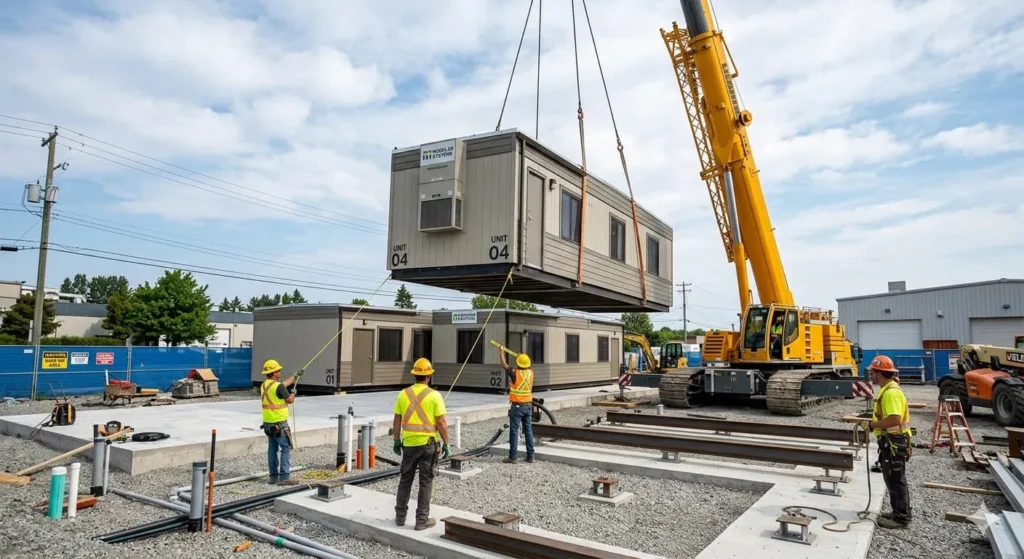
Ordering a container house from an overseas manufacturer is only one part of a modular building project. Before the units arrive at the destination, the project site needs to be ready for unloading, installation, utility connections, and follow-up construction work.
This is easy to underestimate. A container house can leave the factory on schedule and still be unable to start installation when it reaches the project site because the foundation is incomplete, the access road is too narrow, the crane cannot reach the installation area, or the required utilities have not been prepared.
For international buyers, site readiness should therefore be treated as part of the delivery plan, not as a separate task that begins after the shipment arrives.
This guide explains 10 practical checks buyers should complete before their container houses arrive at the site.
Why Site Preparation Matters Before Delivery
A prefabricated building is manufactured under controlled factory conditions, but the final installation takes place in a completely different environment.
The factory can control the structure, panels, doors, windows, interior finishes, and other components. The buyer or local contractor, however, usually has to prepare the land, foundation, access, equipment, utilities, and installation area.
If these two sides are not coordinated, a project can experience delays even when the manufactured units themselves are ready.
The practical goal is simple: when the container houses arrive, the site should be ready to receive, unload, position, connect, and install them.
10 Site Readiness Checks Before a Container House Arrives
1. Confirm the Foundation Is Complete
The first check is the foundation or support system.
The foundation should match the approved building dimensions, support points, level requirements, and anchoring arrangements. It should also be ready before the units arrive according to the agreed installation schedule.
A foundation that is incomplete or significantly out of level can create problems during installation, particularly when multiple modular units need to be aligned.
If you are still planning the foundation, see our guide What Foundation Does a Container House Need? A Practical Guide for International Buyers.
2. Check Truck Access to the Project Site
A container house may arrive at the destination by container truck, but the final project site may be located on a narrow road, inside a construction area, or in a remote location.
Before shipment, buyers should check whether the delivery vehicle can safely reach the unloading area.
Consider:
- Road width
- Turning radius
- Road surface condition
- Overhead cables or structures
- Slopes and difficult sections
- Temporary road restrictions
A delivery truck that cannot reach the planned unloading position may require additional handling, which can increase both cost and installation time.
3. Confirm the Crane or Unloading Equipment
The required unloading equipment depends on the building system, shipment arrangement, site conditions, and installation method.
For projects using cranes or lifting equipment, buyers should determine in advance where the equipment will be positioned and whether it can safely access the unloading and installation area.
The site team should consider:
- Crane working space
- Ground bearing conditions
- Lifting radius
- Overhead obstacles
- Unloading sequence
- Temporary storage requirements
For a large project, the unloading plan should be coordinated with the installation sequence rather than treated as a separate operation.
4. Make Sure the Installation Area Is Clear
The foundation may be ready while the surrounding installation area is still occupied by construction materials, equipment, debris, temporary buildings, or other obstacles.
The area around the foundation should provide enough working space for the installation team to move materials, operate tools, and position the building components safely.
For multi-unit projects, buyers should also confirm the planned sequence of installation so that the first buildings do not block access to later installation areas.
5. Confirm the Building Layout and Unit Positions
Site preparation should be based on the final approved layout rather than an early concept drawing.
This becomes particularly important when several container houses are arranged together to create dormitories, offices, classrooms, accommodation blocks, camps, or other larger facilities.
Before delivery, confirm:
- Unit positions
- Building orientation
- Distances between units
- Entrance directions
- Access paths
- Utility connection locations
A small change in the site layout can affect utility connections, access, drainage, installation sequence, and future maintenance.
6. Prepare Electricity and Water Connections
The building may be manufactured with electrical or plumbing components, but the project site still needs suitable connection points.
Depending on the project, buyers may need to prepare:
- Main electrical supply
- Water supply
- Drainage connections
- Sewage treatment or discharge arrangements
- Internet or communication connections
- Other project-specific utility connections
The exact requirements should be coordinated with the building specification and local regulations before installation begins.
7. Check Drainage and Rainwater Management
Site drainage is easy to overlook when the main focus is on the building itself.
However, water should be managed around the building so that rainwater does not accumulate near foundations, entrances, utility connections, or other vulnerable areas.
Buyers should consider the natural slope of the site, local rainfall, drainage channels, surface water flow, and any known flood risks.
Good drainage planning should be completed together with foundation and site preparation rather than added after the buildings have been installed.
8. Prepare Installation Labor and Tools
A container house can arrive on schedule and still remain unused if there is no installation team available.
Before shipment, buyers should clarify who will be responsible for installation and what level of technical support will be provided by the manufacturer.
The project team should understand:
- Installation sequence
- Required manpower
- Required tools
- Lifting equipment
- Connection and fixing procedures
- Utility connection responsibilities
For international projects, it is useful to clarify these responsibilities before shipment rather than trying to solve them after the containers reach the site.
9. Prepare a Temporary Storage Area for Loose Components
Not every component necessarily remains inside the main folded structure during transportation.
Depending on the product configuration, there may be loose accessories, connection parts, installation materials, stairs, railings, electrical components, bathroom accessories, or other items that need to be stored safely before installation.
A temporary storage area should protect these components from unnecessary damage, moisture, loss, and interference with other construction activities.
This is particularly important for large projects where many containers and accessory packages may arrive within a short period.
10. Match the Delivery Schedule With the Installation Schedule
One of the most practical site-readiness questions is not simply whether the site is ready, but whether it will still be ready when the shipment actually arrives.
International shipping schedules can change because of vessel schedules, port operations, customs clearance, inland transportation, weather, or other logistics factors.
For this reason, buyers should coordinate:
| Stage | What Should Be Ready? |
|---|---|
| Before shipment | Final drawings, foundation, access plan, installation plan, and utility requirements |
| During transportation | Local team, equipment, delivery coordination, and site access arrangements |
| Before unloading | Clear working area, unloading equipment, storage area, and installation personnel |
| During installation | Tools, labor, utilities, safety arrangements, and technical coordination |
For bulk projects, the delivery schedule and installation schedule should be planned together because the arrival of multiple containers can create a significant temporary logistics workload.
What Happens If the Site Is Not Ready?
The consequences of poor site preparation depend on the project, but they can include additional storage, equipment rental, labor waiting time, delivery rescheduling, repeated transportation, or delays to the overall construction schedule.
For example, if a truck arrives but the foundation is not ready, the shipment may need to be temporarily stored. If the crane cannot access the installation area, additional lifting arrangements may be required. If utility connections are incomplete, the building may be physically installed but not ready for use.
These are not necessarily manufacturing problems. They are project coordination problems, which is why site readiness should be included in the procurement plan from the beginning.
Site Preparation Is More Than Foundation Work
A common misunderstanding is to treat site preparation as another name for foundation construction.
In practice, site preparation can include land clearing, leveling, compaction, drainage, foundation construction, access roads, crane working areas, temporary storage, utility preparation, and installation planning.
The foundation is one part of the process. The complete objective is to create a site where the modular building can be delivered and installed without avoidable delays.
For international buyers, this distinction is important because a factory quotation may cover the container house itself while local civil works remain the buyer’s responsibility.
How Site Readiness Connects With Shipping
Site preparation and shipping are closely connected, especially for large orders.
The number of units arriving at the site, the delivery sequence, the available storage area, and the unloading equipment all need to be considered together.
For example, if a project is purchasing multiple Z-Type container houses, the buyer should not only ask how many units fit into each 40HQ. The project team should also ask how those containers will be unloaded, where the units will be temporarily positioned, and how quickly they can be moved into their final locations.
Our guide How Many Container Houses Can Fit in a 40HQ? What Bulk Buyers Should Know Before Shipping explains why loading efficiency should be considered together with the actual project logistics.
What Should Buyers Confirm With the Manufacturer Before Delivery?
Before the shipment leaves the factory, buyers should have clear answers to the following questions:
- What are the final building dimensions?
- What foundation and support requirements apply to the exact model?
- Where are the main support and connection points?
- What equipment is required for unloading and installation?
- What installation tools and manpower are required?
- Which components will arrive separately from the main structure?
- What utility connections need to be prepared locally?
- What technical documents should the site team receive before installation?
- What is the expected installation sequence?
- Who is responsible for final site readiness?
Getting these answers before shipment can prevent a situation where the building is physically ready but the site is not.
How Quality Control and Site Preparation Work Together
Quality control does not end when the factory finishes production. At the same time, site preparation does not begin only when the shipment arrives.
The two processes are connected.
The factory needs to make sure that the finished units match the approved specifications and are properly prepared for transportation. The buyer needs to make sure that the destination site can receive and install those units according to the project plan.
For a more detailed look at what should be checked before shipment, see Container House Quality Inspection Checklist: 12 Things Buyers Should Check Before Shipment.
Frequently Asked Questions
When Should I Start Preparing the Site for a Container House?
Site preparation should begin before the building is shipped and ideally before production is completed. Foundation requirements, access, unloading equipment, utilities, and installation arrangements should be coordinated early enough to avoid delays when the units arrive.
Does Site Preparation Include the Foundation?
Yes, the foundation is usually an important part of site preparation, but site preparation can also include land leveling, drainage, access roads, crane working areas, utility connections, temporary storage, and other work required before installation.
Who Is Responsible for Preparing the Container House Site?
Responsibility depends on the project contract and scope of supply. In many international projects, the manufacturer provides building-side technical information and installation requirements, while the buyer or local contractor handles site preparation, foundation construction, utilities, and local civil works. These responsibilities should be clearly defined before production.
What Equipment Is Needed to Install a Container House?
The required equipment depends on the building system, site conditions, and installation method. Depending on the project, buyers may need lifting equipment, installation tools, electrical tools, connection equipment, and other site-specific resources. The exact requirements should be confirmed with the manufacturer before delivery.
What Is the Biggest Site Preparation Mistake Buyers Make?
One of the most common mistakes is focusing only on the foundation while overlooking access, unloading, installation space, utilities, drainage, storage, and labor. A foundation can be ready while the overall site is still unable to receive and install the building efficiently.
Final Takeaway
A container house project does not start when the truck arrives at the site. The site should already be prepared for that moment.
Before delivery, buyers should confirm the foundation, access roads, unloading equipment, installation area, building layout, utilities, drainage, labor, tools, temporary storage, and delivery schedule.
For international projects, this preparation is especially important because the factory and project site are often separated by long-distance transportation and multiple parties. Solving a site problem before shipment is usually much easier than solving it after the building has already arrived.
The best approach is to treat the manufacturer, shipping plan, site preparation, and installation schedule as parts of one project rather than four separate tasks.