Tel : +86-18630605462 Email : info@jhhycontainerhouse.com

Beijing Jinhuahengyuan Prefab Housing Co., Ltd.
Leading manufacturer of container house, with 150+ global partners
Leading manufacturer of container house, with 150+ global partners
Tel : +86-18630605462 Email : info@jhhycontainerhouse.com
Your project has a tight deadline and an urgent need for space. But traditional construction is slow, complex, and unpredictable. You need a fast, reliable solution to get operational immediately.
Expandable container houses are the ideal fast deployment housing solution. They are transported compactly, can be unfolded on-site in hours with minimal labor, and are ready for occupancy almost immediately. This drastically reduces project setup time and accelerates your operational start-up.
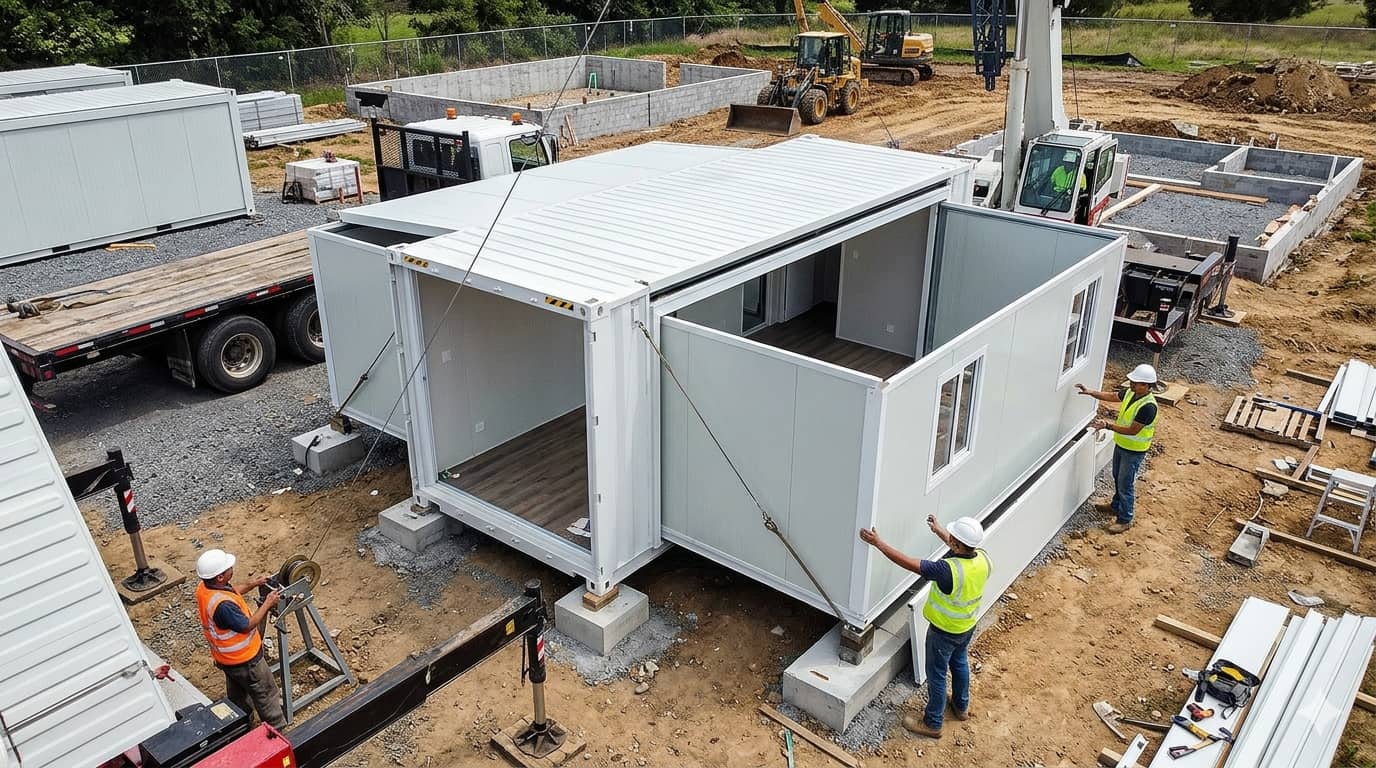
As a supplier, I've seen countless project managers struggle with delays. They have the funding and the team, but they can't start work because they have nowhere to house their staff or set up an office. This is a common bottleneck that can derail an entire project timeline. The good news is that the solution is often simpler than people think. It’s not about building faster; it’s about deploying smarter. Let’s explore how this new approach to building is changing the game for time-sensitive projects.
Many people hear "fast" and think it's just a marketing buzzword. But misunderstanding true rapid deployment can lead to unexpected delays and logistical headaches. Let's define what it actually involves.
True fast deployment is about more than just quick assembly. It covers the entire process: easy transport, minimal site preparation, fast unloading, and swift utility hookups. It means your portable site accommodation is fully operational much sooner, from delivery to occupancy.
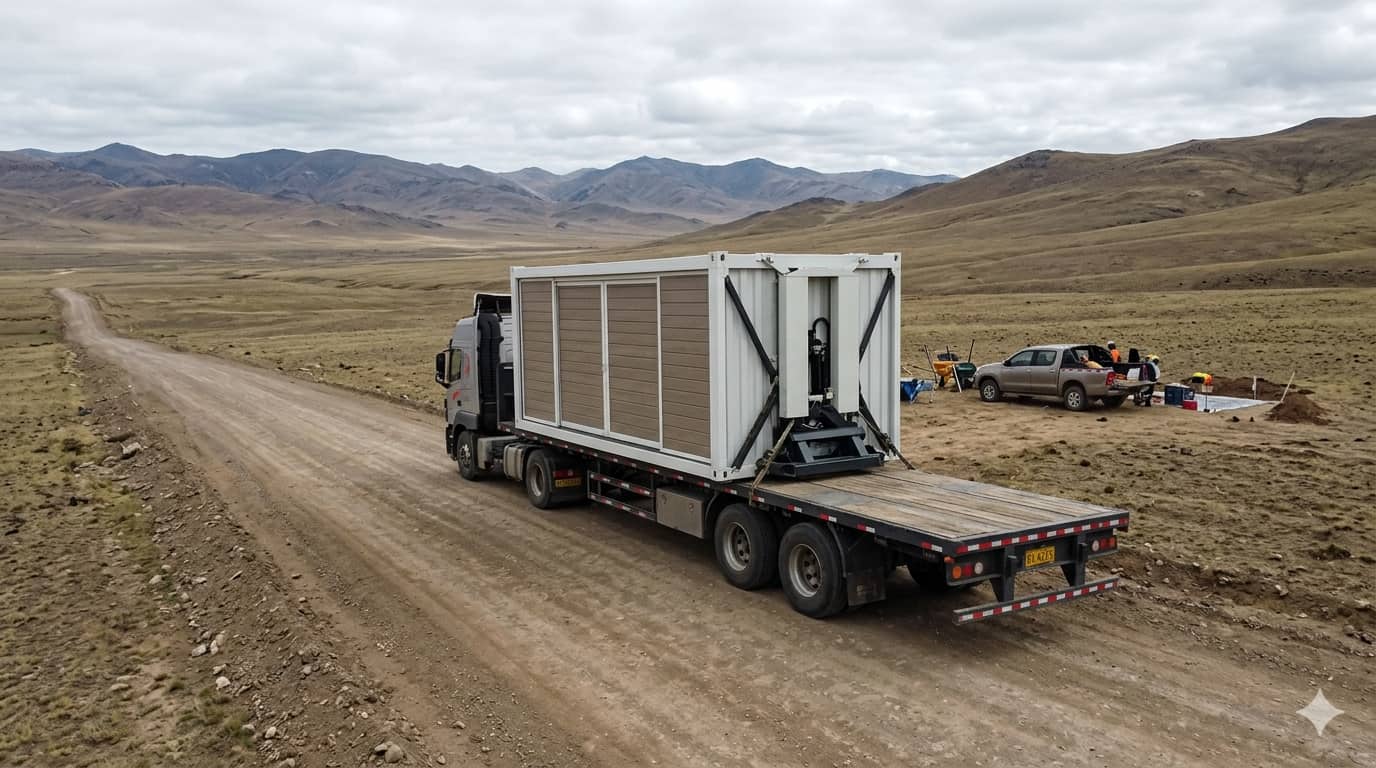
When I talk to clients about fast-deploy projects, I emphasize that we need to look at the whole picture. The "speed" isn't just about how quickly the walls go up. It’s about total project acceleration. True fast deployment includes several key stages, each optimized for efficiency.
This holistic view of speed is what makes solutions like expandable modular buildings so powerful. It’s not just a product; it’s a complete project solution designed to save your most valuable resource: time.
You need a building solution that matches your project's urgent timeline. But traditional methods are often too slow and labor-intensive. Discover how expandable designs are engineered specifically for speed.
Expandable container houses are a perfect fit. They are compact for transport, unfold quickly with minimal on-site labor, and are largely prefabricated. This design shortens the time from delivery to full operational use, especially in remote or temporary locations where traditional construction struggles.
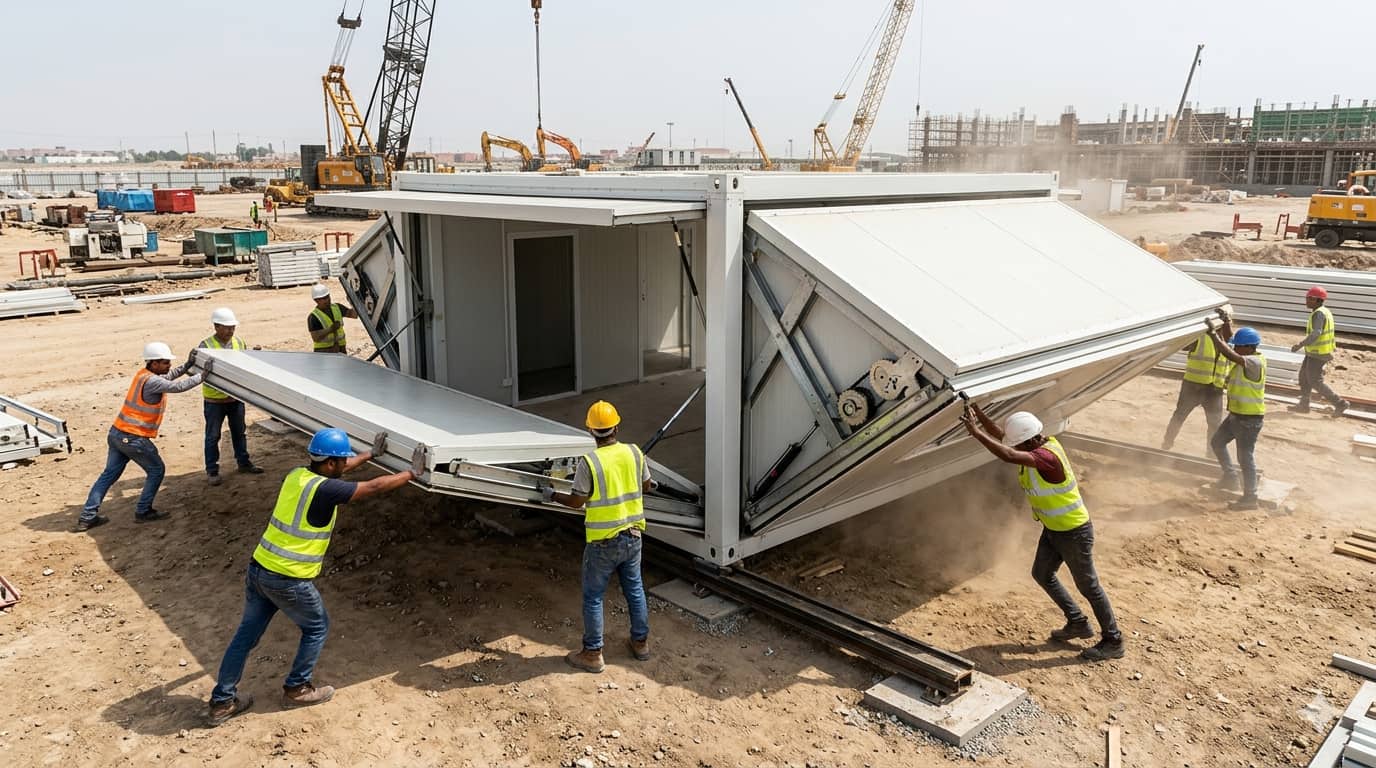
I remember a client working on a remote mining project. They needed housing for 50 workers within a month. Traditional construction would have taken at least six months. We delivered their expandable units, and they had their labor camp fully operational in under two weeks. This is possible because the design directly addresses the core challenges of speed.
The primary advantage is their compactness during transport. The units are folded into a standard shipping container size, making them cheaper and easier to transport. Once on-site, the quick opening mechanism allows a small team to unfold the house in just a few hours. This drastically reduces the demand for on-site labor, a huge benefit in remote areas where skilled workers are scarce. For the project manager, this means a faster project start-up. Your team can move in and begin their work almost immediately, which is critical for projects where every day counts.
You know they're fast, but are they the right choice for your specific project? Choosing the wrong building solution can be a costly and time-consuming mistake. Let's look at the ideal applications.
These rapid installation container houses excel in time-sensitive scenarios. Think construction site accommodation, remote mining camps, emergency response facilities, and temporary commercial pop-ups. Any project where speed and temporary functionality are critical priorities is a perfect use case for this type of building.
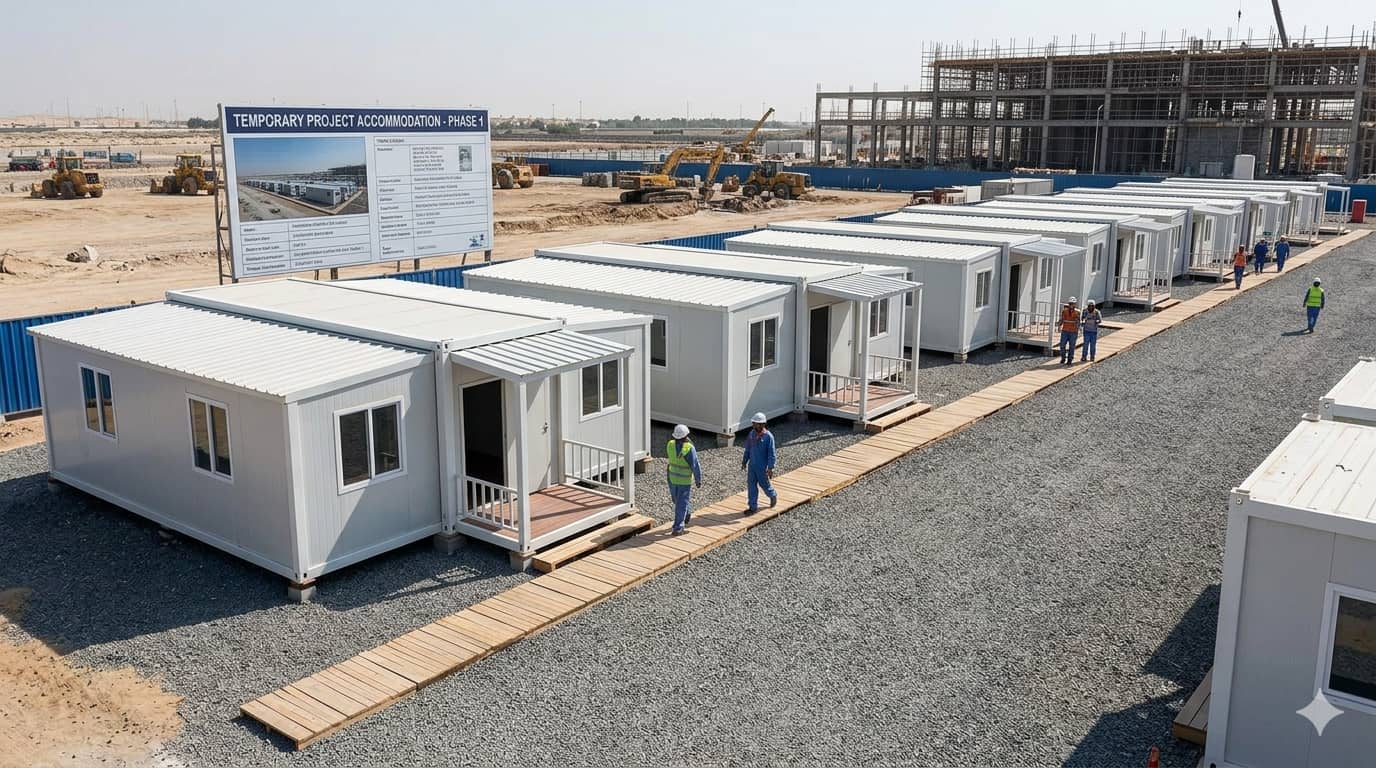
The real value of these buildings becomes clear when you look at specific scenarios where time is the most important factor. They are not meant to replace all forms of construction, but for certain applications, they are simply the best tool for the job. We have helped clients deploy these units in a variety of situations where traditional methods would have failed to meet deadlines.
Here are a few prime examples:
| Project Application | Why Speed is Critical |
|---|---|
| Construction Site Offices | The project management team needs to be on-site from day one to oversee operations. |
| Remote Labor Camps | Workers cannot begin their tasks until safe and comfortable housing is available. |
| Emergency Response Spaces | Medical clinics or temporary shelters must be deployed immediately after a disaster. |
| Event Support Facilities | Ticket booths, first aid stations, or staff rooms are needed for short-term events. |
| Temporary Classrooms | Schools need to accommodate a sudden influx of students without a long construction period. |
In each of these cases, the ability to establish a functional space quickly is not just a convenience; it's a core requirement for the project's success.
The rapid deployment of an expandable house can seem almost magical. But if you don't understand the process, it can be hard to trust the solution. The secret isn't magic; it's smart factory prefabrication.
The incredible speed comes from the factory. Wall systems, structural components, and even interior layouts are completed before shipping. This front-loaded process means fewer tasks, less labor, and reduced dependency on site conditions, ensuring a predictable and fast installation for any fast-deploy project.
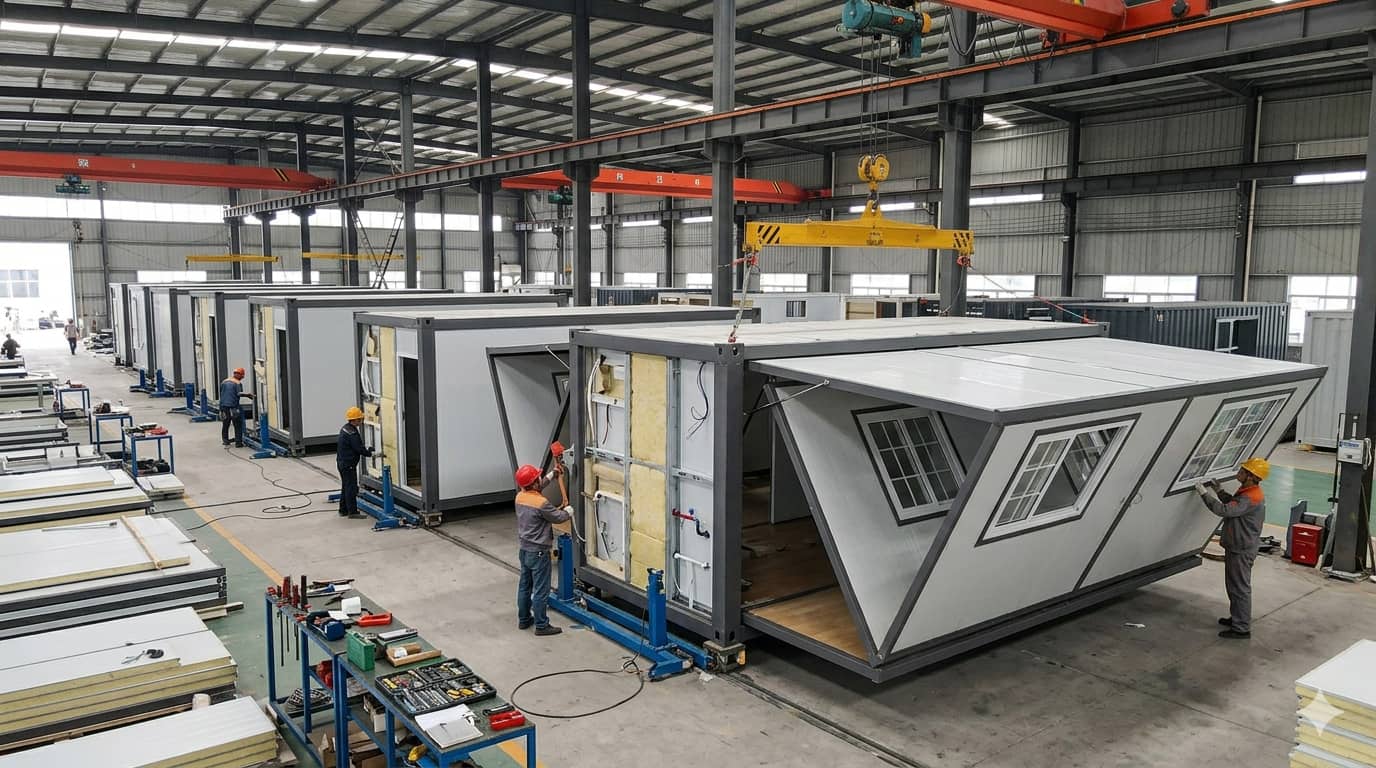
I always tell my customers that the real work happens in our factory, not on their project site. By moving the majority of the construction process into a controlled environment, we eliminate the variables that cause delays in traditional building, like bad weather, material shortages, or labor issues. This is what we mean by "prefabricated readiness."
Here’s what is typically completed in the factory before the unit ever leaves:
Because all these elements are prepared in advance, the on-site work is reduced to simple unfolding, securing, and connecting utilities. This makes the entire process faster and far more reliable.
Is an expandable container house really a better choice than a traditional build? Sticking with old, familiar methods could cost you valuable time and money on urgent projects. Let's compare them directly.
For fast-deploy projects, expandable container houses win on speed and efficiency. They require significantly less installation time, fewer on-site workers, and are less dependent on site conditions. While traditional construction has its place for permanent structures, it cannot match the deployment speed needed for time-sensitive projects.
To make it clear for project managers, I often break down the differences in a simple table. It's not about attacking traditional methods; it's about showing that for a specific type of problem—the need for speed—there is a specialized and superior solution. The goal is to choose the right tool for the job.
Here is a straightforward comparison for fast-deploy projects:
| Feature | Expandable Container House | Traditional On-Site Construction |
|---|---|---|
| Installation Time | Hours to days | Weeks to months |
| On-Site Labor Needs | Low (2-4 people) | High (large, multi-trade crew) |
| Site Dependency | Minimal; less affected by weather | High; very dependent on weather and site conditions |
| Flexibility for Temporary Use | Excellent; easy to relocate | Poor; a permanent structure |
| Project Startup Efficiency | Very high; immediate occupancy | Low; long wait before occupancy |
| Waste & Disruption | Minimal on-site waste | Significant on-site waste and noise |
When you look at it this way, the choice becomes obvious for any project where the timeline is tight and you need to get up and running as quickly as possible.
Installation is just the first step of your project. A fast setup is useless if the building isn't operationally efficient and flexible for the future. Let's look at the long-term benefits.
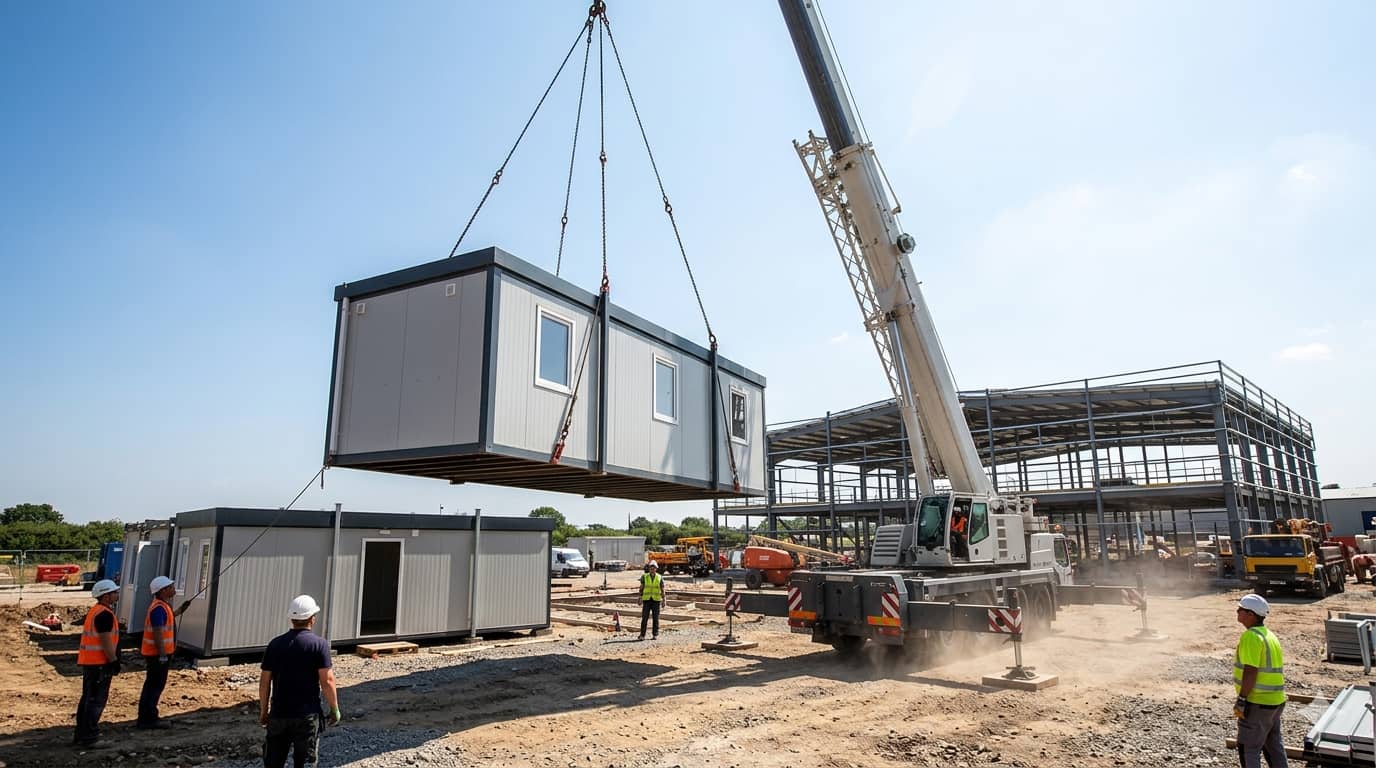
The advantages of an expandable container house continue long after setup. Faster occupancy means your project starts generating revenue or operating sooner. These units are also easily relocated for future projects, can be scaled by adding more modules, and significantly reduce the risk of costly delays.
A project manager for a large infrastructure company once told me that the relocatability was the deciding factor for him. His company had multiple projects lined up over the next five years. Instead of building new site offices each time, they bought a set of our expandable modular buildings. They use them for one project, then simply fold them up and ship them to the next. The return on investment for them was enormous.
This highlights the key operational benefits that smart project managers look for:
These benefits show that an expandable container house is not just a building; it's a strategic asset for any business that relies on fast-deploy project buildings.
For time-sensitive projects, expandable container houses provide an unmatched mix of speed, efficiency, and flexibility. They are the smart solution for getting your operations up and running without delay.


Tel : +86-18630605462
Email : info@jhhycontainerhouse.com
5th Floor, 19b Building, 10th Liushan Street, Yanjiao National High-Tech Zone, Langfang, Hebei
leave a message
Scan to wechat :

Scan to whatsapp :