Tel : +86-18630605462 Email : info@jhhycontainerhouse.com

Beijing Jinhuahengyuan Prefab Housing Co., Ltd.
Leading manufacturer of container house, with 150+ global partners
Leading manufacturer of container house, with 150+ global partners
Tel : +86-18630605462 Email : info@jhhycontainerhouse.com
Struggling with modular units that feel like narrow boxes? The cramped feeling of traditional container layouts can severely limit your project's appeal and comfort for occupants.
An expandable modular home feels bigger because it unfolds on-site to create a wider, more open interior. This allows for better furniture layouts, functional zones, and natural light, unlike the fixed, narrow shape of a traditional container layout.
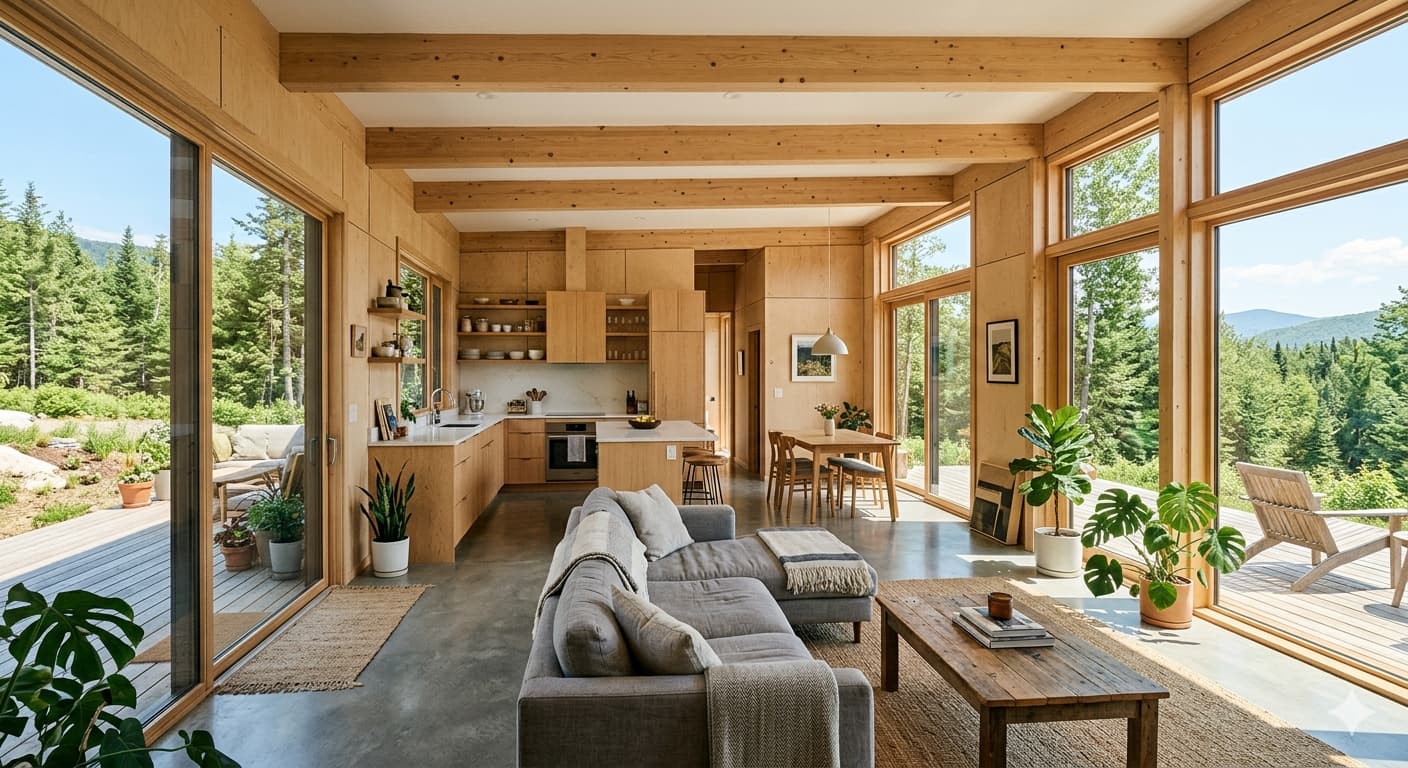
It’s a question I get all the time from my clients. They look at the compact shipping dimensions and worry about the final living space. But the real magic happens after delivery, when the unit transforms. This "feeling" of space isn't just an illusion; it's the result of smart design. Let's break down exactly how this is achieved and why it matters so much for your project.
Confused by how a compact unit becomes a spacious home? Traditional container layouts are permanently stuck with their shipping dimensions, which makes interior design a constant challenge.
The key is the folding mechanism. Expandable modular homes are transported in a compact state but unfold to nearly triple their width on-site. This fundamentally changes the interior from a narrow corridor to a squarer, more livable space.
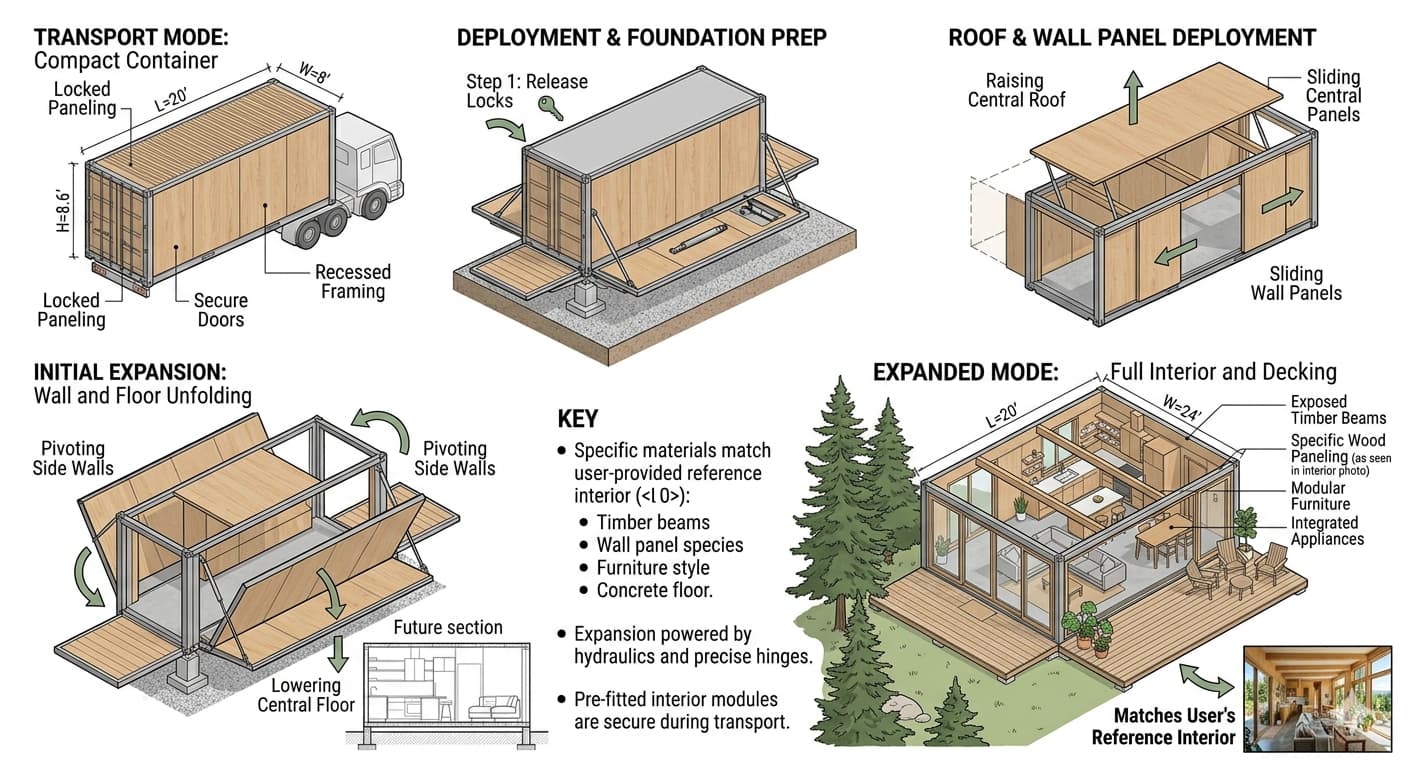
The difference starts with how each unit is built and transported. I've seen countless projects succeed or fail based on this single factor. A traditional container layout is, by its nature, a fixed steel box. Its interior width is typically around 2.3 meters, and that's it. You can't change it. This creates a long, tunnel-like space.
An expandable container house, on the other hand, is designed for transformation. It ships at a standard container width but has one or two folded sections running along its length. Once it arrives at your site, our team or a local contractor can unfold these sections in just a few hours. A unit that was 2.4 meters wide for transport suddenly becomes over 6 meters wide. This completely redefines the internal volume and proportions, giving you a space that feels open and unrestricted.
With a traditional container layout, you're always fighting against its shape. Every piece of furniture, every partition wall, emphasizes the narrowness. This is why they are great for storage or very simple offices, but they struggle when you need to create a comfortable living environment. The expandable design solves this core problem from the very beginning.
Worried your modular home will feel cramped once you put furniture inside? A narrow layout often forces you to place everything in a single line, creating awkward and unusable spaces.
Yes, a wider layout dramatically improves the living experience. It allows for natural furniture arrangements, creating distinct zones for living, dining, and sleeping. This makes a modular home for living feel less like a temporary shelter and more like a real home.
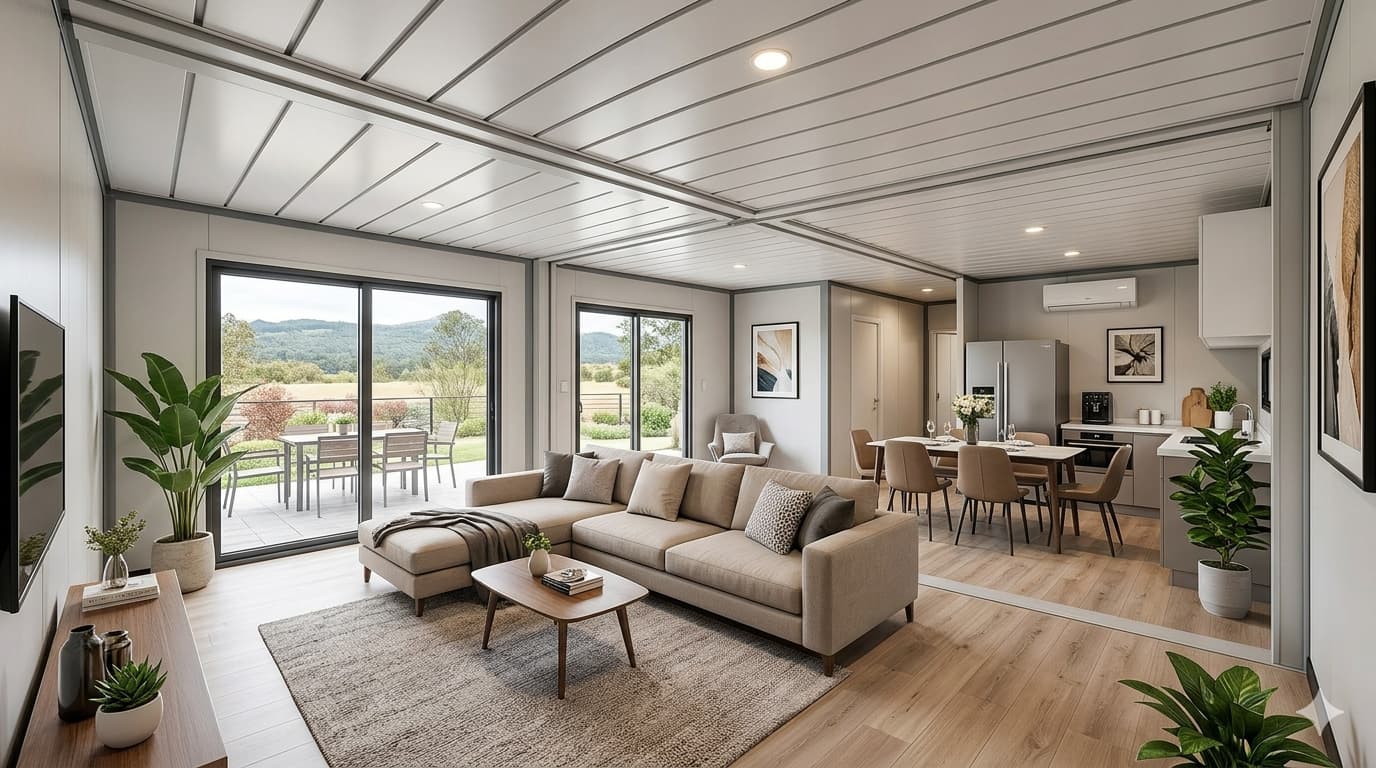
The difference is night and day. I remember a client who was developing a boutique tourist camp. He wanted to fit a queen bed, a small sofa, and a dining table for two in each unit. With a traditional container layout, it was impossible without blocking the main walkway. It felt more like a hallway filled with furniture than a cabin.
When we switched to an expandable prefab house, everything changed. The extra width allowed us to place the bed against one wall and create a separate small living area with the sofa and a coffee table opposite it. We could even add a proper dining nook next to a large window. The furniture no longer dictates the flow; the space allows for a natural and comfortable arrangement.
This ability to group furniture naturally also helps create distinct functional zones. In an open layout modular home, you can have a living area, a sleeping area, and a kitchen area that feel separate, even without full walls. This separation is crucial for privacy and comfort, especially if more than one person is using the unit. It moves the feeling from a single, multi-purpose room to a small apartment with better flow.
Trying to visualize the practical difference between the two options? It's hard to judge comfort from a floor plan alone, leaving you unsure which is right for your project.
Inside, the biggest changes are in walking space, visual openness, and long-term comfort. An expandable house vs container house offers a more natural, home-like environment, while a traditional layout feels more utilitarian and confined, especially for multi-person use.
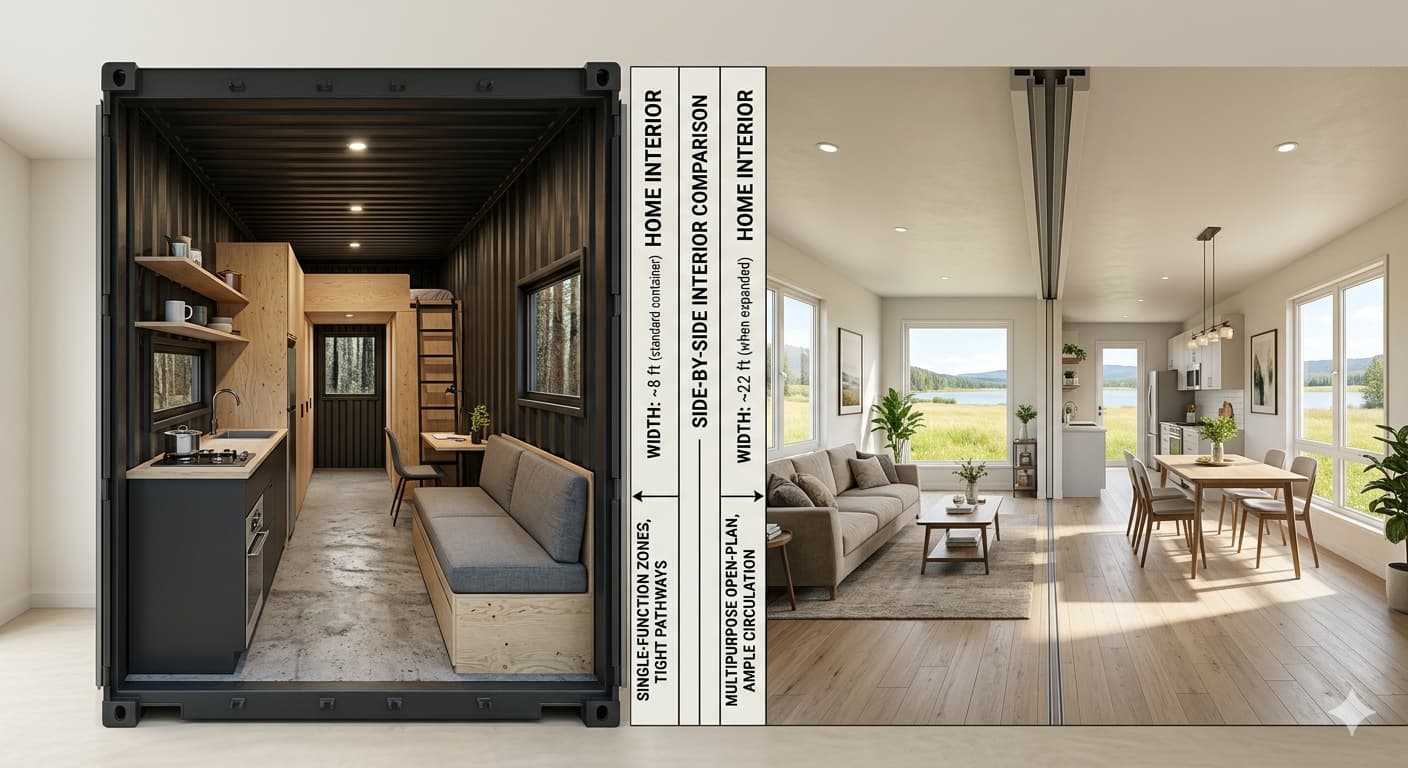
When we talk to project contractors and camp operators, their main concern is the end-user experience. Will their guests feel comfortable? Will their workers be happy? The internal layout is the answer. A portable modular living unit needs to be more than just a box. Let's compare the two options directly on the factors that matter most for daily living.
| Feature | Traditional Container Layout | Expandable Modular Home |
|---|---|---|
| Walking Space | Often a single, narrow path from one end to the other. | Open, central areas with multiple paths around furniture. |
| Furniture Arrangement | Forced into a linear layout along the walls. | Flexible; allows for central placement and grouping. |
| Privacy | Limited; sound and sight travel easily down the corridor. | Better zoning creates perceived and actual privacy. |
| Long-term Comfort | Can feel restrictive and monotonous over time. | Feels more like a traditional apartment, better for longer stays. |
| Visual Openness | Feels enclosed and tunnel-like. | Wide and bright, often with better window placement. |
| Family/Multi-Person Use | Challenging; very little personal space. | Much more suitable; separate zones for different activities. |
For a client building worker accommodation for a long-term mining project, this table made the decision easy. They knew that happier, more comfortable workers are more productive. The enhanced comfort of the expandable model was a direct investment in their operational success, not just an added cost. The same logic applies to a resort owner, where a better guest experience leads to better reviews and higher occupancy rates.
Afraid of choosing the wrong type of modular unit for your needs? Picking a model that's overkill can waste your budget and complicate things for no good reason.
Not always. While expandable modular homes excel in comfort, traditional container layouts are often better for pure utility. They are perfect for basic site offices, secure storage, or projects where transport simplicity and durability are the top priorities.
I always aim to provide the best solution for the client's specific needs, and sometimes, that isn't the most spacious option. It’s important to be honest about where each product shines. An expandable model is not a universal replacement for the traditional container layout.
I recently worked with a construction contractor who needed a durable, stackable, and secure office and tool storage solution for a large building site. The units would be moved frequently, stacked high, and needed to withstand rough handling. In this case, the fixed, robust structure of a traditional container was the clear winner. The interior living experience was not a priority. They needed something simple, strong, and cost-effective. For applications like temporary storage, basic security posts, or highly mobile worksite facilities, the traditional container layout remains an excellent and practical choice.
The key is to define your project's main goal. If the unit's primary purpose is human habitation—whether for tourism, worker housing, or a backyard studio—then the superior living experience of an expandable modular home is almost always worth it. If your primary need is utility, security, or maximum portability and stackability, the traditional layout is a reliable workhorse.
Expandable modular homes feel bigger by transforming from a compact transport unit into a wide, open living space, offering a superior experience over a traditional container's fixed, narrow layout.


Tel : +86-18630605462
Email : info@jhhycontainerhouse.com
5th Floor, 19b Building, 10th Liushan Street, Yanjiao National High-Tech Zone, Langfang, Hebei
leave a message
Scan to wechat :

Scan to whatsapp :